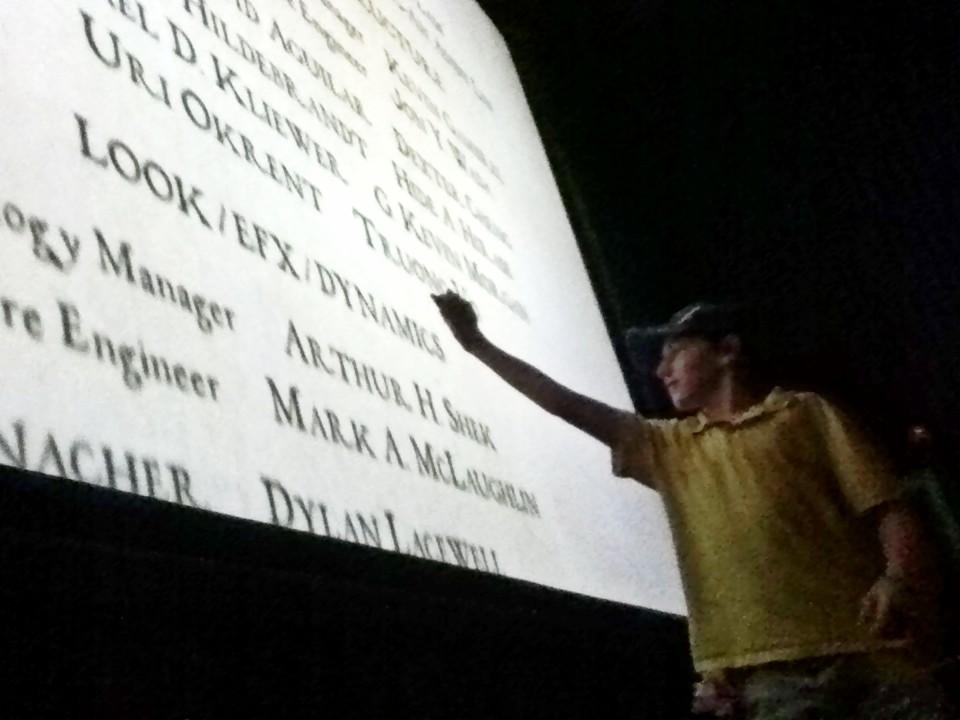
When people ask me about my favorite parts of movies, I often tell them I really enjoyed the credits. I get puzzled looks, scoffs and a lot of “yeah right” responses. But it’s true. I never leave a movie or delete one from my DVR without first going through the credit sequence. I do it because there are often bloopers, outtakes, interviews, extensions of the stories, and sometimes, you even get closure to the movie you’ve just watched.
One of the most memorable and well-known examples is Ferris Bueller’s Day Off, which concludes with a famous scene of the Matthew Broderick portrayed Ferris Bueller coming back into frame and being astounded that people are still watching. He tells everyone to leave, that the credits are over, there’s no more movie. In other words, he wants you to go home.
It’s a funny take on the time-honored tradition of having to list every person and entity that is associated with the arduous task of getting the final product into our theaters, homes and digital devices. It goes without saying, there are a lot of people involved.
Some time ago, a representative from a non-profit, mission focused organization was presenting segments of a production to my church congregation. As she prepared the set up of the final segment, she noted that she planned for us to view the credits. She explained that there were testimonials scattered throughout and then said something that has stuck with me ever since:

So please, don’t let the credits distract you.
This has stuck with me because her request was not for the sake of vanity or to make sure everyone got their just rewards. She sincerely wanted us to hear the testimony of the individuals who shared their stories. I got to thinking; that should be the way we also should approach worthy causes. Obtaining credit should not distract us from the bigger picture.
I’m reminded of Nehemiah, who Andy Stanley observes was “just a regular guy who caught a divine glimpse of what could and should be. And then went after it with all his heart.”
In his book, Visioneering: God’s Blueprint for Developing and Maintaining Vision , Stanley builds a great case for a clear and god-ordained approach to pursuing vision. Nehemiah was concerned over the condition of Jerusalem to the point that he came to view doing something about it as a moral imperative. In Nehemiah’s case, he took on risk and ridicule to return to Jerusalem and rebuild the city and its fortifications.
Along the way to rebuilding the wall and revitalizing Jerusalem, Nehemiah encountered distractions of perceived opportunities, criticism, fear, and more. And yet, he remained intensely focused on seeing the vision through to the very end and without delay.
Having completed the monumental task of completing the repairing and rebuilding of the wall in a mere 52 days, Nehemiah didn’t puff out his chest and trot around asking everyone to “look at what I did.” Instead, he notes (in Nehemiah 6:16), “when all our enemies heard of it, all the nations around us were afraid and fell greatly in their own esteem, for they perceived that this work had been accomplished with the help of our God.”
If you are pursuing a God instilled vision, don’t let distraction derail you
Like Nehemiah, stay focused on the big picture. Stay the course, refining as needed along the way. This should be true of our projects here under the sun as well as the good work that God has begun in us. Here are a few steps to take as you begin to observe distraction creeping into your vision:
- Remember you are doing a great work – one that is bigger than you and one that will require trust, faith and dependence upon God.
- The voice of your critics will reduce as they begin to see visible evidence of that vision coming to light (though the criticism will never end.
- The vision you are pursuing is not about you (or you getting the credit).
- Don’t be distracted by the credits. God will be glorified through the work.
Are you pursuing a vision in your ministry, your life, your home or elsewhere?
Share it in the comments. I’d love to pray for you and offer encouragement for you to be focused in bringing more of the big picture into focus.
Leave a Reply